Portfolio
Selected work in product design, accessibility, and design standards. Each case shows what I owned, what changed, and where the result is still open.
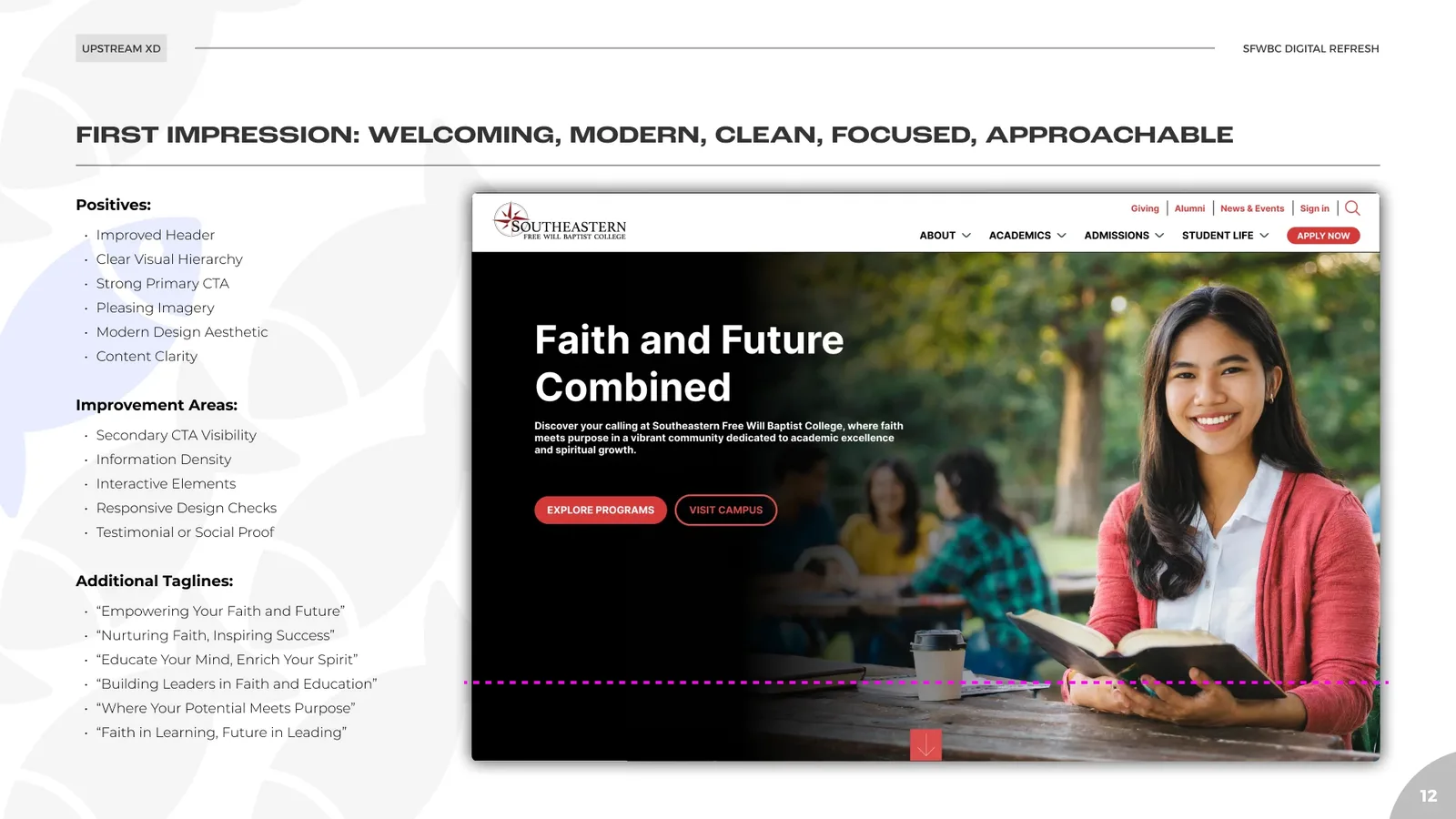
Southeastern Free Will Baptist College
From pitch to launch: a website redesign, an accessibility specification, and what happened between the spec and the build.
What happened: The site launched with most of the design. Accessibility was not checked against the spec, and impact remains unmeasured.
View case study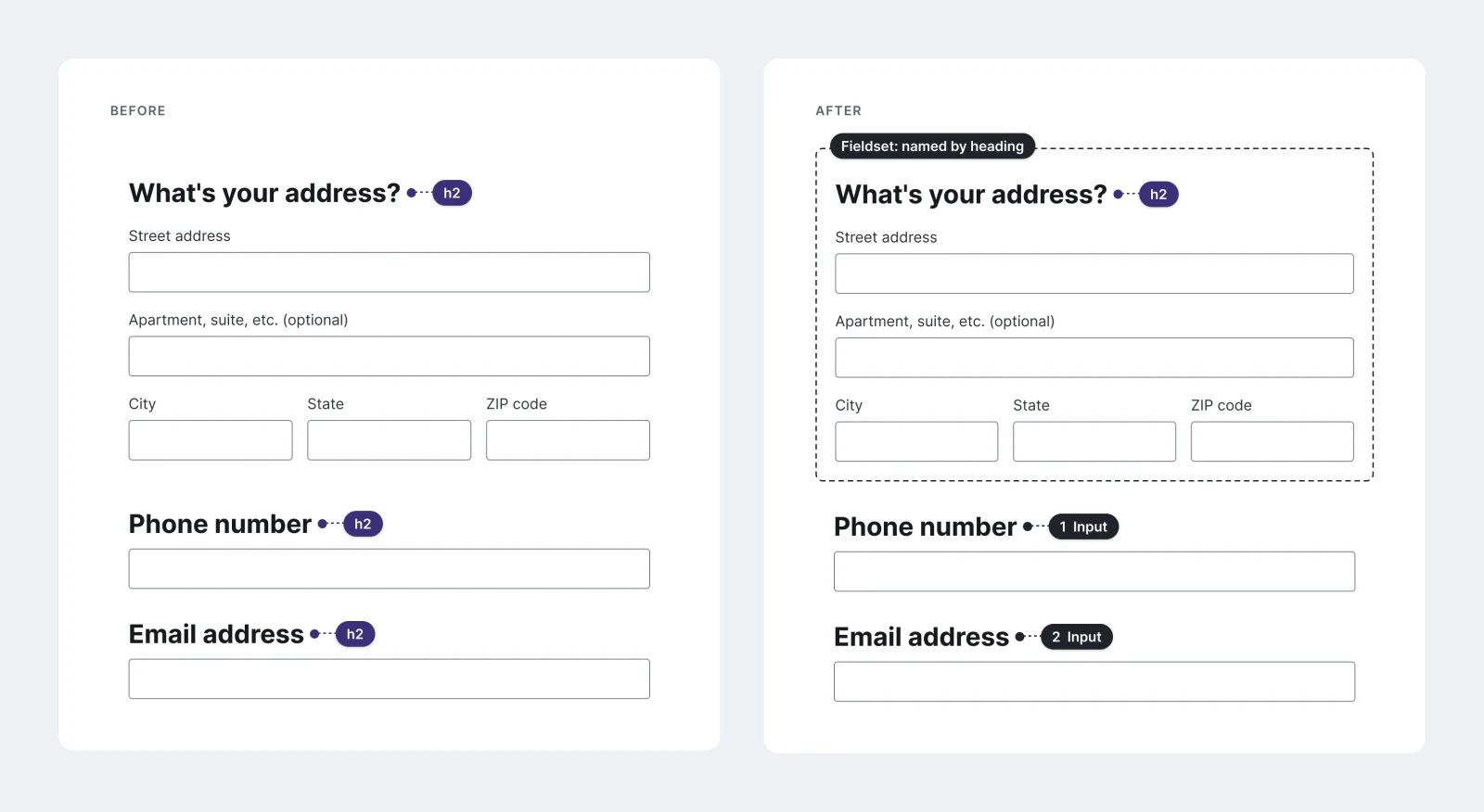
Accessibility Documentation System
An annotation kit, a documentation template, and an audit template that give accessibility decisions a place in the design file.
What happened: Released and piloted. Fifteen training sessions delivered; consistent use remains limited.
View case study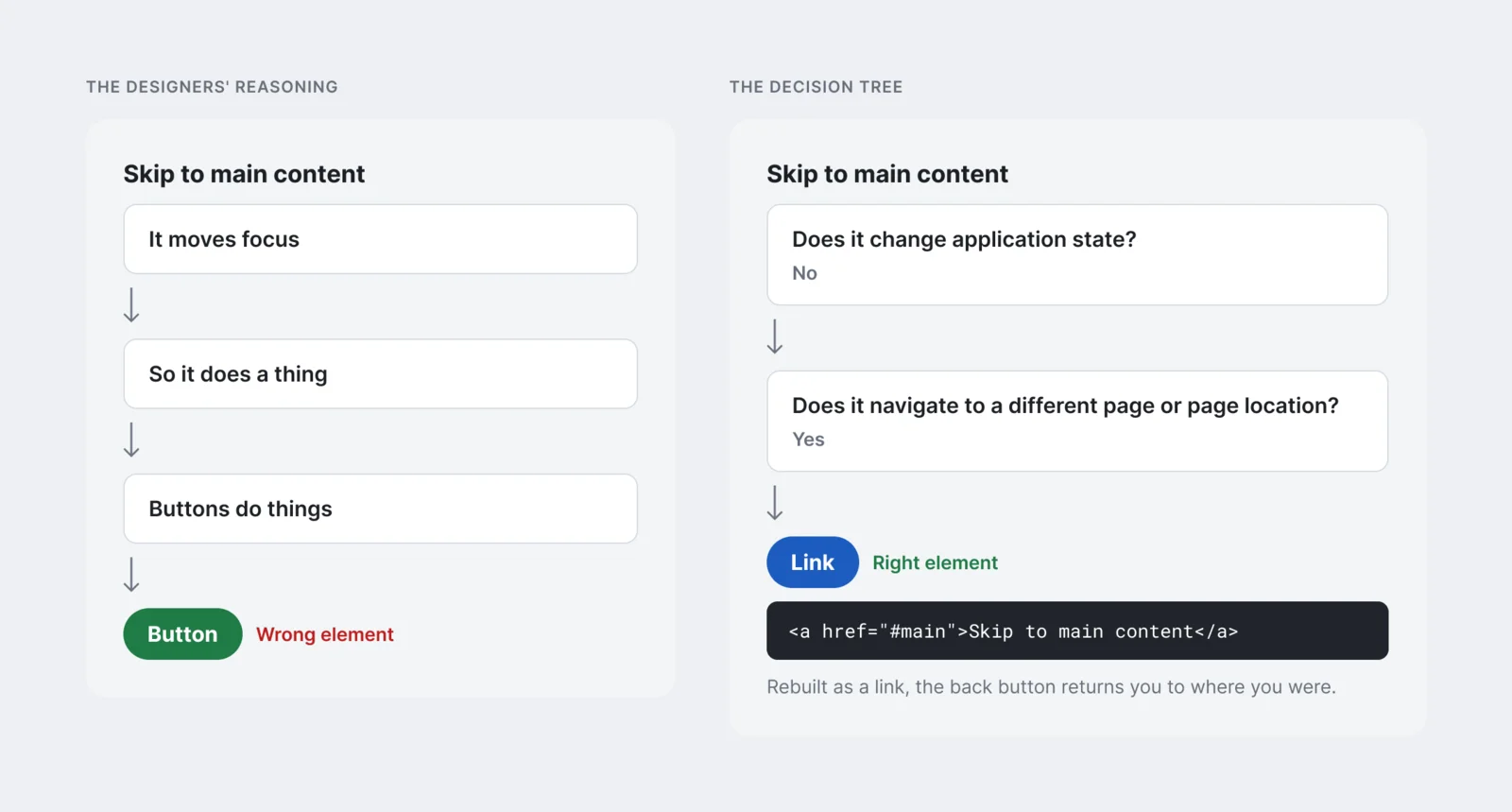
Design Best Practices Library
Fifty-nine interaction design practices, scoped from an ask for ten and released in order of complexity, each ending in a decision designers can work through.
What happened: Twelve releases published, with designers using the practices in active work.
View case study
More case studies
Three more case studies cover enterprise work and are password protected. A summary of each is below.
AI Prototype Review
Password protectedAn enterprise insurer: Review lead
An AI-generated prototype advanced past design with cited claims that all looked equally credible. I led a review that traced every citation to its source, audited accessibility in the browser, and proposed checkpoints for AI-assisted work. The review was delivered. The checkpoints are still under consideration.
Designing for Trust in Online Insurance Quoting
Password protectedAn enterprise insurer: Research and user experience (UX) strategy lead
Insurance shopping starts from mistrust, and on this platform shoppers didn't know the company running it. Before designing anything, I tested a common assumption: that trust and distrust are one dial.
- The question
- Are trust and distrust one problem, where raising one lowers the other, or two separate problems that need separate fixes?
- How I tested it
- I wrote hypotheses before fielding anything. A survey measured trust and distrust separately, and unmoderated walkthroughs showed how people reacted as they moved through a quote. Where ratings and behavior disagreed, behavior won.
- What I found
- They behave as separate problems, with different drivers and different exits. Trust predicted finishing online. Distrust predicted calling for help or abandoning the quote. Reducing distrust moved behavior more than adding trust.
- The strategy
- Fix each on its own track, and test them separately so it's clear which change moved which outcome. In the flow, that means easy questions first, a reason beside every sensitive question, and personal and financial details deferred until a carrier needs them.
- What I handed off
- A strategy written in four tiers, from an executive summary to a builder reference, and annotated lo-fi wireframes for the intake phase. Handed to design in .
- What's still open
- Build and results sit with the program, so no outcome is claimed.
Mapping the Operation a Partner Couldn't See
Password protectedAn enterprise insurer: Senior UX Design Lead
A digital-first partner insurer sold our homeowners policies but couldn't see what happened after bind. I built the enterprise's first service blueprint to show the whole operation, from the customer to the backstage, on one timeline.
- The question
- What happens to a policy after bind, and who does the work? The partner needed that answer before deepening the relationship.
- Why a blueprint
- It's the one artifact that holds the customer's experience and the backstage work in the same frame, on the same timeline.
- How I built it
- Interviews with domain experts across underwriting, inspection, renewal, claims, and billing, mapped from bind day through the end of the term. Eight sub-process maps cover the spots the main map couldn't resolve on its own.
- What it surfaced
- Backend systems more complex than anyone outside them knew, and operating knowledge that lived in experts' heads, not in documents.
- What changed
- Assumptions about claims and inspections gave way to how the work actually runs. The partner team reused the content with other partners, without the visual.
- What's next
- A lighter, componentized blueprint, with a playbook and a decision map, so the next one costs less than the first.
Read the full cases
If you were given a password, enter it here. To request one, email steve@upstreamxd.com.